
Leave Your Message

China Best Chip Cleaning Tank Manufacturer How to Choose?

Choosing a reliable China Best Chip Cleaning Tank Manufacturer requires more than comparing prices or polished product photos. In semiconductor production, a tank can influence particle control, chemical stability, operator safety, and wafer yield. The right supplier should understand your cleaning chemistry, substrate size, temperature range, and throughput before recommending equipment.

Werner Kern, a respected semiconductor cleaning pioneer, stated, “Cleaning is the most important thing in semiconductor processing.” That principle still matters when evaluating a modern Chip Cleaning Tank. Ask whether the tank uses compatible materials, such as high-purity polypropylene or PVDF, for your chemicals. Inspect weld quality, internal corners, drain design, spray coverage, and filtration access. A smooth surface matters. Tiny residues can collect in hidden seams.

Experience also appears in small details. Does the manufacturer provide trial cleaning data? Can its engineers explain particle results and chemical concentration changes? Are heating controls stable within your required range? Request material certificates, factory inspection records, electrical documentation, and customer references from similar applications. A dependable supplier should welcome technical questions, not avoid them.

No selection method is perfect. I have seen attractive systems fail because maintenance space was ignored. Another practical concern is after-sales support, especially when replacement pumps or sensors are needed quickly. Compare response times, commissioning procedures, spare-parts availability, and training quality. The strongest manufacturer is not always the cheapest. It is the supplier that connects design evidence with measurable cleaning performance and accepts responsibility when assumptions prove wrong.
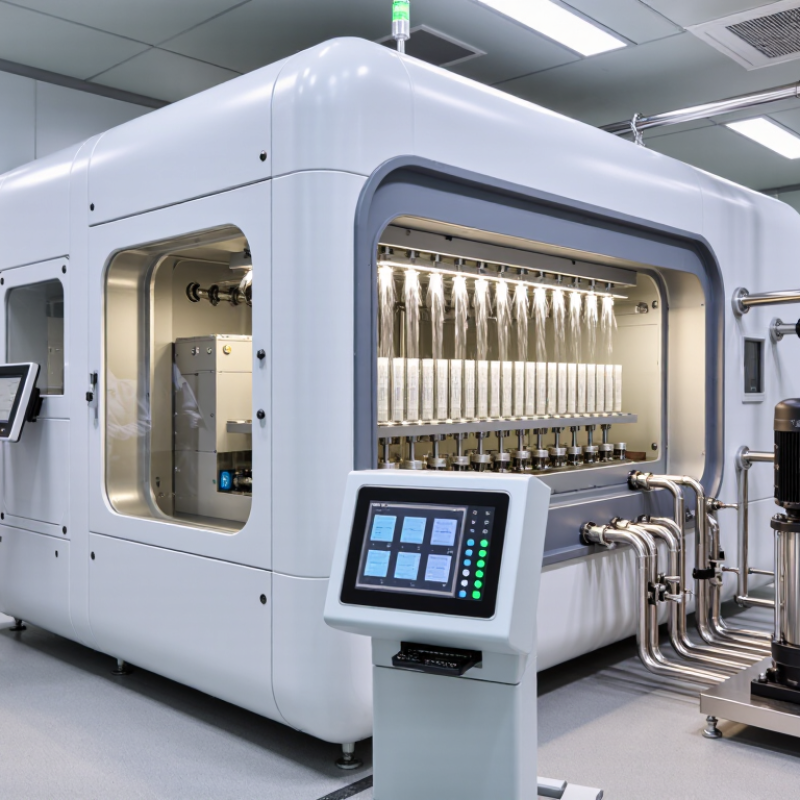
China Best Chip Cleaning Tank Manufacturer How to Choose?

What Is a Chip Cleaning Tank and Why Does Its Quality Matter?

A chip cleaning tank is a controlled vessel used to remove particles, residues, and processing chemicals from semiconductor components. It may use pure water, cleaning solutions, spray action, or ultrasonic energy. The tank must keep the cleaning process stable, not merely hold liquid.

Quality matters because tiny contamination can affect later bonding, coating, or testing. A reliable tank uses corrosion-resistant materials that match the chosen chemicals. Its inner surfaces should be smooth and easy to inspect. Rough corners can trap particles and create repeated contamination. Temperature sensors, liquid-level controls, and filtration systems also need consistent performance. Small errors can become expensive defects.

In practical workshops, operators often notice problems before instruments do. A cloudy liquid, uneven drying, or unusual pump noise deserves attention. The tank should provide even flow across the working area. Dead zones may leave residue on smaller chips. Maintenance access is important too, although it is sometimes treated as an afterthought. That decision can slow production later. Cleaning performance also depends on chemistry, loading volume, and operator habits, so no tank can solve every process weakness. Before choosing a manufacturer, buyers should review material certificates, test records, spare-part support, and cleaning results under real operating conditions. A polished appearance is not enough. Test data can still be incomplete, and that limitation should be discussed openly.
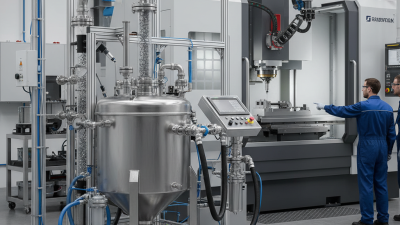

Which Materials and Designs Are Best for Chip Cleaning Tanks?

Choosing the right material is essential for chip cleaning tanks. High-purity polypropylene offers strong chemical resistance and practical durability. PVDF performs better under harsher chemicals and higher operating temperatures. PTFE provides excellent resistance, but its cost and mechanical limits require careful evaluation. Quartz is useful when visual inspection or low contamination is critical.

Small details matter.

Material compatibility should consider cleaning chemicals, temperature, concentration, and exposure time. A tank that survives one chemical may weaken under another. Experienced engineers should review chemical charts and real process conditions before production. We have found that welded joints deserve close attention. Poor joints can trap residue and create contamination risks. Clean surfaces alone are not enough.

Tank design also affects cleaning performance. Rounded internal corners reduce residue buildup and simplify wiping. A slightly sloped bottom supports complete drainage. Proper overflow channels help control liquid levels without disturbing delicate wafers. Separate inlets and outlets can improve flow distribution. For heated tanks, uniform temperature control is more important than simply adding power. Sensors should be easy to inspect and replace.

No design is perfect.

Some tanks may require stronger structures, while others need lower particle generation. A practical selection should balance chemical resistance, cleanliness, maintenance, operating cost, and future process changes. Suppliers should provide material certificates, dimensional drawings, weld inspection records, and test results. These details make comparison more reliable.

China Best Chip Cleaning Tank Manufacturer: How to Choose?

Typical Maximum Continuous-Use Temperature by Tank Material

Temperature capability is one important screening factor when selecting a chip cleaning tank. PP is economical for moderate-temperature aqueous cleaning, PVDF offers stronger chemical resistance, PTFE supports demanding chemical and high-temperature processes, quartz is suitable for highly pure or specialized cleaning environments, and 316L stainless steel provides mechanical strength and durability. Actual performance depends on chemical concentration, exposure time, heating method, ultrasonic power, joint design, and applicable safety requirements.

Values shown are representative engineering reference values, not guaranteed operating limits. Confirm the exact material grade and process compatibility with the tank supplier before production use.

How to Evaluate a Chip Cleaning Tank Manufacturer

Choosing the best chip cleaning tank manufacturer requires more than comparing prices. Evaluate the supplier’s practical experience with semiconductor cleaning processes, tank design, and factory installation. Ask for project records, material certificates, and operating data from similar applications. A reliable manufacturer should explain how the tank handles temperature, chemical exposure, particle control, and fluid circulation.

Inspect the tank structure carefully. Welds should be smooth, consistent, and easy to clean. The selected lining or metal must match the cleaning chemicals, operating temperature, and process time.

Request details about filtration, overflow control, heating accuracy, and emergency drainage. A small factory trial can reveal problems that drawings often hide. Check whether the supplier measures particle levels and temperature stability during testing.

Documentation also shows technical maturity. Look for inspection reports, maintenance instructions, spare-part information, and clear acceptance standards. The engineering team should answer specific questions without using vague promises. Visit the production site if possible. Observe material storage, welding practices, quality checks, and final cleaning.

I once underestimated service response time, and the installation schedule suffered. That mistake still matters. A manufacturer may offer excellent equipment but weak after-sales support. Confirm response times, remote assistance, technician availability, and training arrangements before signing a contract. No supplier is perfect. However, honest communication about limitations is often more valuable than polished sales language.

What Manufacturing Standards and Quality Tests Should You Check?

When choosing a China-based chip cleaning tank manufacturer, inspect its manufacturing standards before comparing prices. SEMI’s 2024 equipment forecast placed global semiconductor manufacturing investment near US$112.8 billion. That scale demands repeatable fabrication, not attractive brochures.

Ask for ISO 9001 records, controlled welding procedures, material certificates, and complete batch traceability. For PVDF, PFA, or PTFE tanks, request chemical-resistance evidence based on ASTM D543 or equivalent testing. SEMI F57 guidance is also useful for evaluating polymer materials in chemical and ultrapure-water systems. Check whether the workshop controls temperature, humidity, and airborne particles under ISO 14644 requirements. It should document resin grades, welders, inspection tools, and calibration dates.

Quality testing must include dimensional inspection, hydrostatic or pneumatic leak testing, and weld examination. Confirm the test pressure, holding time, acceptance limit, and test medium. Do not accept “100% tested” without raw records. A factory acceptance test should verify heating uniformity, circulation rate, drain performance, sensor accuracy, and emergency shutdown response. For critical applications, ask for rinse-water data, including particle count, resistivity, TOC, and metallic contamination. The exact limits should match your process chemistry.

A common mistake is checking the tank shell while ignoring valves, seals, tubing, and fittings. These parts often introduce contamination first. No checklist is perfect. During a site audit, compare drawings with the finished tank, photograph hidden welds, and review one failed test, if available. Honest corrective-action records can reveal more than polished certificates.

How to Compare Prices, Services, and Delivery Capabilities?

China Best Chip Cleaning Tank Manufacturer: How to Choose?

When comparing Chinese chip cleaning tank manufacturers, do not judge price alone. A low quotation may exclude pumps, sensors, installation, or export packaging. Ask for a detailed cost sheet with material grades, tank size, heating method, controls, testing, and spare parts. Request sample drawings before making technical comparisons. Small design differences can affect chemical resistance and maintenance costs.

Service quality is easier to measure through evidence. Check whether engineers provide process advice, layout drawings, factory inspection support, and clear response times. Ask for weld inspection records, leak-test reports, surface-finish data, and material certificates. Cleanroom packaging matters too. Dust inside a carefully built tank can delay installation.

Delivery capability needs practical proof. Compare production schedules, inspection dates, packaging methods, and shipping documents. Ask how the supplier handles damaged parts or delayed components. A supplier promising ten days may not have tested the complete system. That is a warning sign. I have found that communication records often reveal more than polished brochures. Still, buyer evaluations can be imperfect, especially when specifications change late. Leave time for design revisions and acceptance testing. The best comparison includes total ownership cost, technical support, and realistic delivery performance, not only the factory price.

China Best Chip Cleaning Tank Manufacturer: How to Choose and Compare Prices, Services, and Delivery Capabilities?

Comparison Dimension Entry-Level Fabricator Specialized Process-Equipment Supplier High-Specification OEM Integrator Recommended Evaluation Method
Typical tank application Basic wet cleaning, rinsing, or chemical storage Multi-stage wafer, substrate, or component cleaning Integrated automated cleaning and chemical-handling lines Match the tank design to chemistry, temperature, cleanliness, and automation requirements.
Indicative equipment price US$3,000–12,000 US$10,000–35,000 US$30,000–100,000+ Compare the same scope, material, tank volume, heating, filtration, controls, packaging, and installation terms.
Common tank materials PP, PVC, or stainless steel PP, PVDF, PTFE-lined parts, or stainless steel Application-specific polymer and metal combinations Confirm chemical compatibility using concentration, temperature, exposure time, and mechanical-load data.
Typical working volume 20–500 L 100–2,000 L 500–5,000 L or engineered to order Check usable volume rather than external dimensions only; allow space for load, agitation, and overflow control.
Temperature control Optional; basic controller Integrated heater, sensor, and over-temperature protection Validated heating, cooling, alarms, interlocks, and recipe control Request temperature uniformity, control accuracy, ramp rate, and safety-interlock specifications.
Filtration and circulation Basic pump or no filtration Circulation loop with replaceable filtration Configured filtration, flow monitoring, sensors, and process alarms Compare flow rate, filter rating, wetted materials, pump compatibility, and maintenance access.
Automation and controls Manual or semi-automatic control PLC control with HMI and basic data logging Recipe management, traceability, remote diagnostics, and line integration Verify PLC brand neutrality, communication protocols, user access levels, and data-export format.
Customization capability Low to medium Medium to high High; engineering-led project design Ask for layout drawings, process-flow diagrams, utility requirements, and design-change procedures.
Indicative production lead time 2–5 weeks 5–10 weeks 10–20+ weeks Request a milestone schedule covering engineering approval, fabrication, testing, packing, and shipment.
Sample or prototype support Usually limited Often available by appointment Formal process testing and factory acceptance testing commonly available Prioritize suppliers that can test with representative chemicals, loads, temperatures, and cleaning cycles.
Quality documentation Basic inspection report and packing list Material certificates, drawings, manuals, and test records Full turnover package, traceability records, FAT/SAT documents, and validation support Define required documents before ordering and include them in the purchase contract.
International shipping support Usually buyer-managed or basic export support Export packing and freight coordination commonly available Project logistics, customs documentation, installation, and commissioning support Compare Incoterms, wooden-case treatment, shock protection, insurance, and destination responsibilities.
Warranty coverage Typically 12 months for manufacturing defects Typically 12 months; selected components may have separate terms Usually 12 months after commissioning or 18 months after shipment, subject to contract Clarify exclusions, response time, spare-parts policy, labor costs, and warranty start date.
After-sales response target 1–3 business days Within 1–2 business days Dedicated project support and scheduled service agreements Obtain a written service-level commitment and escalation contact before purchase.
Best fit for Budget-sensitive, low-risk, non-automated applications Most customized production projects with moderate automation High-purity, high-throughput, validated, or fully integrated production lines Select based on total cost of ownership and process risk, not purchase price alone.
Benchmark note: Price and lead-time ranges are indicative market benchmarks for custom chip-cleaning tanks and small-to-medium process systems. Actual quotations vary according to tank size, material, chemical compatibility, heating or cooling requirements, filtration, automation, documentation, testing, shipping terms, and installation scope. Confirm all specifications and delivery commitments in a formal quotation.
Suggested Selection Weight Entry-Level Fabricator Specialized Process-Equipment Supplier High-Specification OEM Integrator
Initial price — 25% 5/5 3/5 2/5
Process capability — 25% 2/5 4/5 5/5
Delivery capability — 20% 5/5 4/5 2/5
Service and documentation — 15% 2/5 4/5 5/5
Customization and integration — 15% 2/5 4/5 5/5
Illustrative weighted result 3.45/5 3.75/5 3.65/5