
Leave Your Message

2026 Top Crystal Quartz Glass Suppliers for Global Buyers

Global buyers evaluating Crystal Quartz Glass suppliers in 2026 face a demanding mix of purity, thermal stability, dimensional control, and dependable delivery. A clear tube under bright inspection lights may look flawless, yet trace contamination or uneven wall thickness can affect performance in demanding applications. The details matter.

Demand also reflects wider investment in advanced manufacturing. SEMI’s December 2024 World Fab Forecast projected global semiconductor fab capacity growth of 6% in 2025 and 7% in 2026. That forecast is useful context, not a direct measure of quartz-glass demand. The U.S. Geological Survey’s Mineral Commodity Summaries provide a further reference for silica supply and trade, although silica statistics should not be confused with finished quartz-glass output.

This guide compares suppliers through practical checks: documented material grades, production capabilities, inspection procedures, customization, lead times, and technical support. Buyers should request current specifications and traceability records, then confirm that sample parts match real operating conditions. A polished catalogue is not enough. Supplier claims deserve verification.

One limitation deserves candor: no source material was provided for a verifiable quotation from a named Crystal Quartz Glass expert. Rather than invent an attribution, this introduction leaves that quotation out. For publication, add a direct quote only after checking the expert’s name, exact wording, and original source. Reliable sourcing begins with evidence, even when that makes the copy less complete.
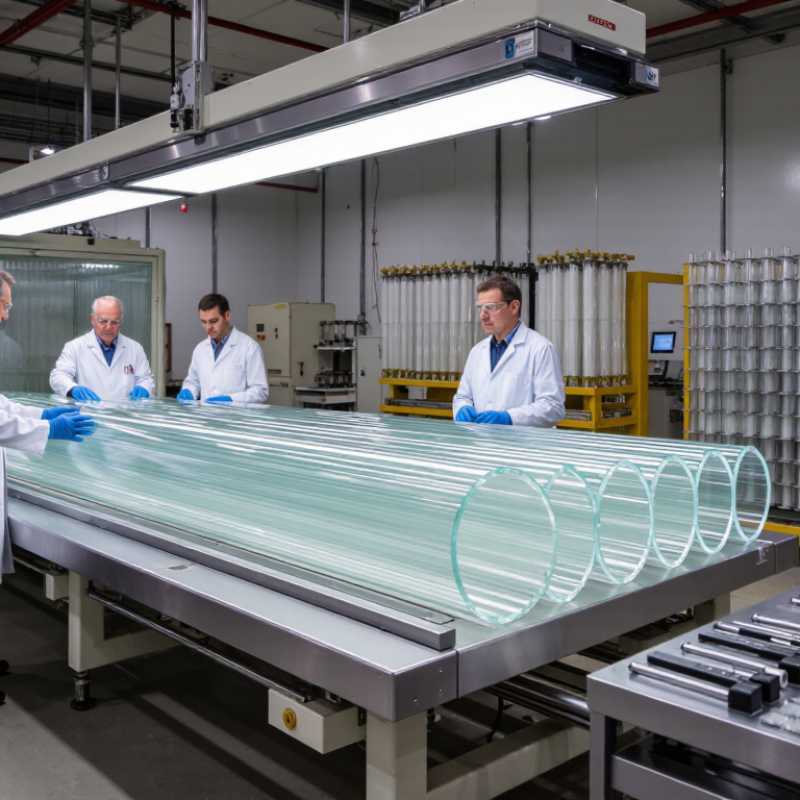
2026 Top Crystal Quartz Glass Suppliers for Global Buyers

What Crystal Quartz Glass Is and How It Is Used

Crystal quartz glass, often called fused silica, is made mainly from high-purity silicon dioxide. Despite its name, it is generally an amorphous glass, not a block of natural crystal. That distinction matters. Its low thermal expansion helps it withstand rapid temperature changes better than ordinary glass, while selected grades transmit ultraviolet and visible light effectively. Performance varies with purity, thickness, surface finish, and wavelength.

These properties make quartz glass useful in laboratory tubes, optical windows, semiconductor process components, and high-temperature lighting equipment. A clear tube in a furnace, for example, can tolerate intense heat while allowing inspection of the contents.

Optical applications need tighter control: small bubbles or surface defects may distort light. Not every grade suits every job.

Buyers should check operating temperature, chemical exposure, dimensional tolerances, and transmission data for the specific part. In practice, catalog descriptions can make material selection seem simpler than it is; actual conditions sometimes reveal overlooked limits. Asking for test data and sample inspection is sensible, especially when replacement parts must match existing equipment.
How to Assess Quartz Glass Suppliers in 2026

How to Assess Quartz Glass Suppliers in 2026

Assess a quartz glass supplier against your application, not a broad product label. Request specifications for purity, dimensions, wall thickness, bubbles, and inclusions. Confirm which test methods support each stated value. For optical applications, ask for transmission data across the wavelengths you use. For thermal processes, review the supplier’s temperature limits and testing conditions. Details matter. A polished data sheet can still leave gaps, and batch variation is easy to underestimate.

Tips: Ask for a sample from a current production lot. Measure it using your own inspection process, then compare results with the quoted tolerances. Request material traceability and relevant quality records, and check that certificates match the product and manufacturing site. Ask how defects are handled.

Reliable communication is part of supplier quality. Get written confirmation of lead times, packaging, and how changes to materials or processes are reported. If a supplier cannot explain a specification clearly, pause before placing a large order. A site visit or video review may help clarify production controls, though it cannot replace independent testing. Keep a record of sample results and approved specifications for later deliveries.

Leading Global Suppliers and Their Manufacturing Capabilities

Global buyers should assess suppliers by process control, not catalogue breadth. Fused-quartz glass is amorphous. Crystalline quartz has an ordered lattice, so their production routes and specifications differ. For glass, ask whether suppliers control high-purity feedstock, melting, forming, annealing, precision machining, and final cleaning. Small bubbles, metallic contamination, or residual stress can undermine optical transmission and thermal cycling. Request lot-level certificates, impurity limits, dimensional tolerances, and documented test methods.

SEMI’s 2024 World Fab Forecast projected global semiconductor fab capacity growth of 6% in 2024 and 7% in 2025. This points to expanding demand for advanced manufacturing materials, but it is not a direct sales forecast for quartz glass.

Compare suppliers on monthly capacity, lead-time stability, furnace maintenance, and backup production lines. Ask to review sample inspection records. Outsourcing can be practical, but unclear ownership of critical process steps deserves scrutiny. A polished certificate alone is not enough.

How Suppliers Compare on Quality, Certifications, and Delivery

Quartz glass suppliers should be compared using measurable quality criteria, not polished catalog images alone. Ask for the specified silica purity, dimensional tolerances, and inspection records for the exact product grade. For tubing or sight glasses, check wall thickness, surface finish, and visible bubbles under consistent lighting. Small details matter. A sample can look clean yet vary in diameter enough to complicate assembly. I would also ask how defects are recorded and whether replacement terms are written clearly.

Certifications help only when their scope matches the product and facility. Request current documents, confirm issuing bodies, and check whether tests cover the relevant application. Delivery claims deserve equal scrutiny: compare production lead times, packaging methods, and shipping milestones. A supplier should explain how fragile parts are protected, such as with dividers and impact-resistant outer cartons. Delays happen. Build in a buffer, especially for custom dimensions, and ask for updates before dispatch. One weakness in many comparisons is treating an estimated date as a guarantee.

Tips: Request a small trial batch before placing a large order. Record measurements, inspect packaging on arrival, and compare results with the agreed specification. Keep the checklist simple—and revise it when real shipments reveal gaps.

2026 Top Crystal Quartz Glass Suppliers for Global Buyers - How Suppliers Compare on Quality, Certifications, and Delivery

Buyer note: The entries below compare common supplier profiles, not named or verified companies. Lead times are indicative planning estimates and vary with specification, order quantity, tooling, and destination. Confirm all product data and certificates directly with suppliers.

Supplier profile Typical product focus Quality points to compare Certifications and documents to verify Indicative production lead time Best fit for buyers
High-purity fused-silica specialist Fused silica tubes, rods, plates, and custom components for thermal or optical applications. Request composition and trace-metal data, dimensional tolerances, surface-finish limits, and batch traceability. Fused silica is valued for low thermal expansion; verify the grade and test method for the actual part. Current ISO 9001 certificate, if claimed; material test report; inspection records; and applicable declarations for the destination market. Often around 4–8 weeks for made-to-order components; confirm stock availability and production slot. Applications requiring controlled material properties and technical documentation.
Custom fabrication workshop Cutting, grinding, polishing, drilling, bending, or finishing quartz-glass parts to drawing. Compare drawing-control procedures, critical-dimension inspection, edge quality, cleanliness, and sample approval. Ask which operations are performed in-house and which are subcontracted. Quality-system certificate and scope; inspection reports; approved sample records; and material certificates for the supplied starting stock. Often around 3–7 weeks after drawing and sample approval; complex parts may take longer. Buyers needing non-standard dimensions, finishing, or small-to-medium production runs.
Industrial tubing and furnaceware producer Quartz tubes, sleeves, boats, crucibles, and other heat-process components. Check operating-temperature guidance, wall-thickness consistency, dimensional tolerances, thermal-shock limits, and recommended cleaning or handling procedures. Material grade documentation, batch identification, quality-system evidence, and any application-specific test reports requested in the purchase specification. Often around 2–6 weeks for standard sizes; custom tooling or non-standard dimensions can extend delivery. Industrial users seeking repeat orders of tubes or thermal-process components.
Optical-grade component supplier Quartz windows, discs, plates, and components with specified optical or surface requirements. Specify wavelength range, transmission or absorption requirements, surface quality, flatness, parallelism, and test conditions. Do not assume “optical grade” represents a universal specification. Inspection data against the agreed drawing and optical specification; material traceability; current quality-system documentation, if claimed. Often around 4–10 weeks for custom optical parts; inspection and finishing requirements affect timing. Buyers with optical performance requirements and documented acceptance criteria.
Stocking distributor or export supplier Standard tubes, rods, and plates sourced from one or more manufacturers. Confirm actual stock, manufacturer and grade traceability, storage condition, packaging, and whether inspection is performed before shipment. Request original material documentation where available, supplier quality documents, export paperwork, and destination-specific compliance declarations. Stock items may ship in days; replenishment or non-stock items may take several weeks. Transit time is additional. Buyers prioritizing standard sizes, consolidated sourcing, or faster dispatch from available inventory.

Procurement checks: Obtain a written specification and acceptance criteria, confirm certificate validity and scope with the issuer where appropriate, request a pre-production sample for critical parts, and distinguish production lead time from shipping and customs-clearance time. ISO 9001 relates to a quality management system; it does not by itself certify a specific quartz-glass product.

Steps for Choosing and Sourcing from a Global Supplier

For “2026 Top Crystal Quartz Glass Suppliers for Global Buyers,” sourcing should begin with a drawing, not a sales promise. Define purity, dimensions, surface finish, transmission range, bubble limits, and thermal performance. Ask suppliers for lot-specific test results and traceability records. The USGS Mineral Commodity Summaries 2025 estimates U.S. industrial sand and gravel output at about 120 million metric tons in 2024. That figure describes a broad raw-material category, not high-purity quartz glass; it cannot verify a supplier’s finished product. Request samples and measure them against your own acceptance criteria. Small details matter.

Check manufacturing capability, quality controls, production capacity, and change-notification procedures. Ask how suppliers prevent contamination during cutting, polishing, and packing. A certificate alone is not enough. Inspect a sample under consistent lighting, and record dimensions with calibrated tools. UNCTAD’s Review of Maritime Transport 2024 reports that more than 80% of world merchandise trade by volume moves by sea. For international orders, confirm packaging, moisture protection, insurance, delivery terms, and realistic transit buffers before paying a deposit. Compare quotations line by line, including inspection costs and replacement terms. I would still recheck lead times after approval; schedules shift, and that risk is easy to underestimate.

2026 Top Crystal Quartz Glass Suppliers for Global Buyers

Technical reference for choosing and sourcing fused silica (quartz glass).

These representative processing-point temperatures help buyers compare material specifications. Values vary by grade and test method, so confirm them against the supplier’s product datasheet and required application before ordering.