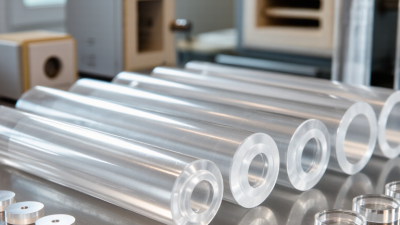
Crystal Quartz Glass supports demanding applications in semiconductor processing, laboratory equipment, lighting, optics, and high-temperature manufacturing. Its low thermal expansion and strong chemical resistance make it valuable where ordinary glass may crack, deform, or contaminate sensitive processes. Yet quality varies significantly between suppliers. Purity alone does not tell the whole story.
Industry data supports this growing demand. Grand View Research’s fused silica market analysis identifies semiconductor, solar, and optical technologies as major growth areas. MarketsandMarkets also highlights rising demand for high-purity quartz materials in electronics and advanced manufacturing. Meanwhile, SEMI’s semiconductor industry forecasts show continued investment in global fabrication capacity. These trends increase pressure on suppliers to deliver stable quality, not merely attractive prices.
This guide reviews seven leading Crystal Quartz Glass suppliers worldwide. The comparison considers material purity, hydroxyl content, thermal performance, machining accuracy, customization, certifications, and delivery reliability. Practical evaluation matters here. A polished website is not enough. Buyers should request batch certificates, dimensional tolerances, inspection records, and sample pieces before placing large orders. Small surface flaws can become costly failures inside a hot furnace or vacuum chamber.
No ranking fits every application. A laboratory may value fast customization, while a semiconductor manufacturer may prioritize traceability and ultra-low contamination. Supplier claims also deserve careful verification. Independent testing remains wise, especially for critical components. This list offers a structured starting point, but real performance should be judged against your process conditions, specifications, and risk tolerance. That final step is easy to overlook.
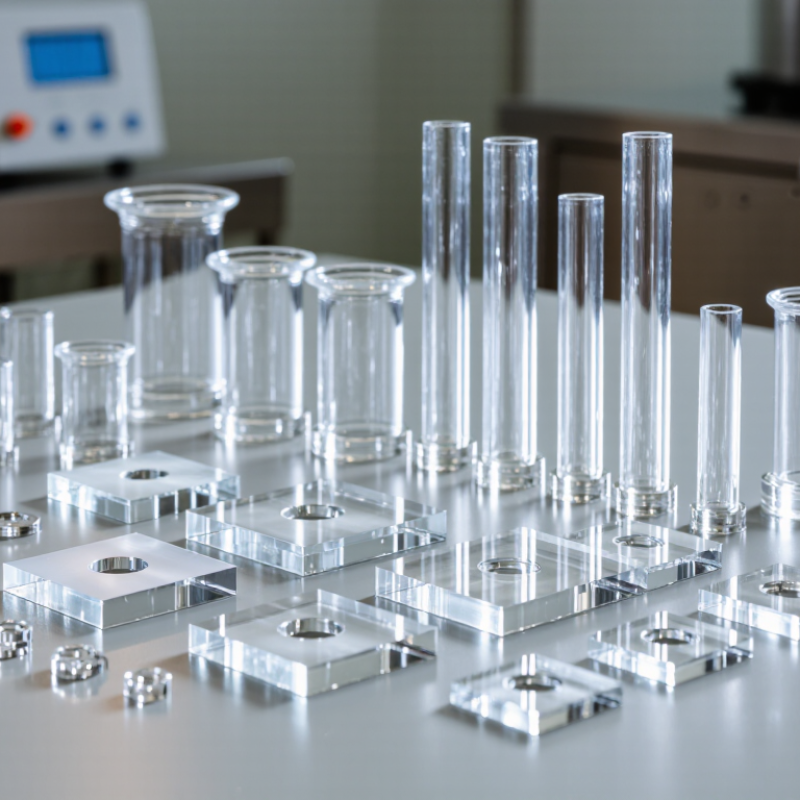
Quartz glass, also called fused silica, contains extremely high-purity silicon dioxide. Typical commercial grades exceed 99.99% SiO₂, while synthetic grades can reach 99.9999%. This purity supports strong ultraviolet transmission and low contamination. Its thermal expansion is about 0.55 × 10⁻⁶/K. That is far below ordinary glass. Typical softening temperatures approach 1,700°C, according to technical data evaluated through ASTM C799 and related glass-testing methods. It still needs careful handling.
Grade selection depends on manufacturing route and application. Electrically fused grades suit general laboratory and thermal equipment. Flame-fused grades offer good optical clarity and controlled wall geometry. Synthetic fused silica performs better in deep-UV systems, where trace metals can absorb energy. However, “highest purity” is not automatically the best choice. Surface finish, bubbles, hydroxyl content, and dimensional tolerance can matter more.
Industrial demand is closely connected to advanced manufacturing. The International Energy Agency reported nearly 420 GW of global solar photovoltaic additions in 2023. Quartz crucibles and process tubes support high-temperature silicon processing. Semiconductor furnaces also use quartz boats, liners, and cleaning chambers. Laboratories rely on quartz beakers, reaction tubes, and UV cells. Lighting, optical instruments, and fiber-preform production use its transparency and heat resistance. The U.S. Geological Survey’s Mineral Commodity Summaries also identifies industrial silica as a critical feedstock for glassmaking and high-value manufacturing. Real-world performance can disappoint when thermal shock, alkaline cleaning, or metal contamination is underestimated.
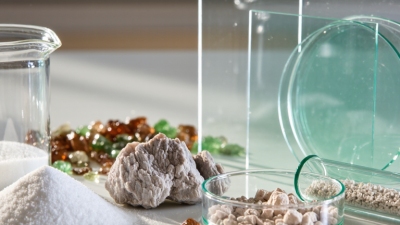
When evaluating crystal quartz glass suppliers worldwide, begin with the material, not the sales presentation. Request the quartz purity, hydroxyl content, bubble rating, inclusions, dimensional tolerances, and surface-finish standards. These details affect thermal stability, optical performance, and service life.
Ask for recent inspection reports from qualified laboratories. Confirm whether test results match the exact production grade you will receive. A sample batch is essential. Examine its color, wall thickness, clarity, and resistance to repeated heating. Small differences often appear only after processing. Check how the supplier controls raw materials, furnace temperature, cleaning, and final inspection. Factory photos help, but a documented audit provides stronger evidence.
Reliability also depends on communication. Measure response times, technical accuracy, packaging quality, and the supplier’s ability to explain defects without hiding them. Request references from comparable industries, realistic production schedules, and clear replacement terms for damaged goods. Verify export documents and shipping practices for your destination. A low quotation may exclude protective packaging, testing, or inspection costs. That can make it expensive later.
Look for consistency, not impressive promises. A perfect supplier rarely exists. Even experienced buyers can overvalue certificates and overlook batch variation. Keep written specifications, approve a reference sample, and review performance after delivery. This practical record supports better decisions than a polished website alone.
The seven leading quartz glass suppliers differ less in appearance than in process control. Supplier One focuses on semiconductor tubes and boats, where particle counts and thermal uniformity matter. Supplier Two specializes in optical-grade windows, checking transmission across ultraviolet wavelengths. Supplier Three serves laboratory equipment with custom reactors, ports, and small-batch fabrication. Supplier Four provides large fused-quartz components for photovoltaic furnaces. Supplier Five emphasizes high-purity rods and sleeves for fiber production. Supplier Six combines machining with flame polishing, reducing secondary handling. Supplier Seven targets research users, offering short runs and detailed inspection records. These profiles reflect practical buying needs, not simple rankings.
Grand View Research has reported continued growth in the global fused silica market, supported by semiconductor, solar, and optical applications. SEMI’s World Fab Forecast also indicates sustained expansion in semiconductor manufacturing capacity through the middle of this decade. That demand raises pressure on suppliers to document traceability, hydroxyl content, bubble levels, and dimensional tolerance. A useful comparison should examine furnace technology, cleaning protocols, lead times, and failure-response procedures. Ask for sample inspection data. Ask again after production. Supplier claims can sound precise, yet test methods may differ. One weakness in this review is unavoidable: public reports rarely separate quartz glass revenue from broader silica categories. Buyers should therefore verify certificates, audit production sites, and compare parts under identical thermal cycles. Small details matter.
This chart summarizes how frequently seven leading quartz glass supplier profiles are associated with major application areas. Semiconductor processing and laboratory equipment are the most recurring areas, while optical, solar, chemical-processing, UV, and telecommunications uses also appear across the supplier landscape.
7 Best Crystal Quartz Glass Suppliers Worldwide
Comparing suppliers requires more than checking a catalog photograph. Quartz glass should show low impurity levels, stable wall thickness, controlled thermal expansion, and clean surface finishing. The U.S. Geological Survey reported approximately 96 million metric tons of U.S. industrial sand and gravel production in 2023. However, bulk volume does not prove optical or semiconductor-grade purity. Ask for batch certificates, hydroxyl content, dimensional tolerances, and thermal-shock test results.
Customization separates capable suppliers from simple resellers. Confirm whether they can produce tubes, plates, crucibles, or special flanges from technical drawings. A useful supplier should explain machining limits before accepting the order. Samples matter. They reveal polishing marks, edge chipping, and uneven transparency more honestly than sales claims. I have found that “custom” can sometimes mean only a modified length.
Pricing depends on purity, geometry, machining, inspection, packaging, and order volume. A 2024 market assessment by Grand View Research estimated the global fused silica market at roughly USD 1.4 billion in 2023, with continued growth through 2030. Rising demand may tighten production schedules. Standard parts often ship within two to four weeks, while complex fabricated pieces may require six to twelve weeks. Request a written lead-time range, not a hopeful date. Also compare replacement policies, export documentation, and packaging protection. Cheap glass can become expensive after one cracked delivery.
| Supplier Profile | Typical Product Range | Declared SiO₂ Purity | Quality and Performance | Customization Capability | Common Certifications | Typical MOQ | Indicative Price Level | Typical Lead Time | Best Fit |
|---|---|---|---|---|---|---|---|---|---|
| Supplier Profile 1 | Fused quartz tubes, rods, plates, and laboratory components | 99.995%–99.999% | ★★★★★ Very low metallic contamination; strong thermal-shock resistance |
Precision cutting, drilling, grinding, polishing, fire-polishing, and custom dimensions | ISO 9001 commonly available; material inspection reports available on request | 1–10 pieces for prototypes; 20+ pieces for repeat orders | High | 3–6 weeks | Semiconductor, laboratory, and high-temperature process equipment |
| Supplier Profile 2 | Quartz glass tubing, viewports, sight glasses, and process windows | 99.99%–99.999% | ★★★★☆ Good optical clarity and dimensional consistency for industrial use |
Custom wall thickness, diameter, length, bevels, holes, and ground or polished edges | ISO 9001; dimensional inspection documentation typically offered | 10–25 pieces, depending on size and processing | Medium–High | 2–5 weeks | Industrial furnaces, chemical processing, and analytical equipment |
| Supplier Profile 3 | UV-grade quartz plates, optical windows, lenses, and lamp envelopes | 99.995%–99.999% | ★★★★★ High UV transmission when low-absorption material and suitable finishing are specified |
CNC machining, optical polishing, anti-reflection coating coordination, and drawing-based production | ISO 9001; coating and optical test reports may be available | 5–20 pieces for custom optical parts | High | 4–8 weeks | UV systems, spectroscopy, photonics, and scientific instruments |
| Supplier Profile 4 | Large quartz plates, discs, crucibles, boats, and furnace accessories | 99.99%–99.995% | ★★★★☆ Reliable high-temperature stability; larger parts may require tighter process control |
Large-format cutting, forming, slotted parts, custom openings, and heat treatment | ISO 9001 frequently available; batch traceability depends on order requirements | 1–5 large parts or 10–30 standard components | Medium–High | 4–7 weeks | Furnace construction, thermal processing, and materials research |
| Supplier Profile 5 | Standard quartz tubes, rods, discs, and laboratory consumables | 99.99%–99.995% | ★★★★☆ Consistent general-purpose performance with broad stock availability |
Basic cutting, end finishing, drilling, and small-batch dimensional adjustments | Quality certificates and inspection records commonly available | 10–50 standard pieces | Medium | 1–3 weeks from stock; 3–5 weeks custom | Universities, laboratories, maintenance, and general industrial applications |
| Supplier Profile 6 | High-purity quartz crucibles, reaction vessels, and custom fabricated parts | 99.995%–99.999% | ★★★★★ Excellent contamination control and high-temperature durability for demanding processes |
Complex fabrication, welded assemblies, custom joints, covers, ports, and precision finishing | ISO 9001; chemical analysis, dimensional reports, and batch traceability often offered | 1–10 custom parts | High | 5–9 weeks | Advanced materials, crystal growth, semiconductor, and specialty chemical processing |
| Supplier Profile 7 | Quartz lamp sleeves, heating elements, transparent tubes, and replacement parts | 99.99%–99.995% | ★★★★☆ Good thermal performance and practical consistency for equipment replacement programs |
Drawing-based reproduction, cut-to-length parts, end sealing, and assembly support | ISO 9001 may be available; product-specific compliance documentation should be confirmed | 25–100 pieces for standard replacement items | Low–Medium | 2–4 weeks | Industrial heaters, UV equipment, furnaces, and replacement-part supply |
Note: Pricing and lead-time levels are indicative market benchmarks for fused quartz and crystal quartz glass products. Actual quotations depend on purity, dimensions, tolerances, surface finish, testing requirements, order quantity, packaging, and shipping destination. Certification availability and technical specifications should be verified with each supplier before purchase.
Selecting the right crystal quartz glass supplier starts with your application, not a ranking alone. The seven strongest options may serve very different industries and regions. Laboratory vessels need low impurity levels and stable dimensions. Semiconductor components demand strict surface control and traceable processing. Fit matters.
Ask each supplier for material specifications, inspection records, and recent batch data. Important details include hydroxyl content, light transmission, thermal expansion, wall tolerance, and working temperature. Request sample pieces before placing a large order. Test them under your actual heating, cooling, cleaning, or pressure conditions. Do not guess. A polished surface can still hide stress or dimensional errors.
Regional capability affects total performance. Check production capacity, packaging methods, export experience, delivery reliability, and local documentation requirements. A nearby supplier may reduce freight damage and shorten replenishment time. However, a distant specialist could offer better purity or machining accuracy. Compare the complete landed cost, not only the quoted unit price. I have seen buyers overlook custom packaging, then receive chipped tubes after a long shipment. That mistake is avoidable, but not always obvious during initial selection. Also examine how the supplier handles nonconforming products, technical questions, and urgent revisions. Clear communication often reveals more than a sales presentation. A reliable partner should explain limitations honestly and provide evidence for every critical claim.