Exploring the Role of Silica in Glass Production and Its Applications?
Glass production relies heavily on silica. Silica in glass forms the backbone of its structure. The purity and composition of silica impact the glass’s final properties. This mineral comes from sand, which is abundant and natural.
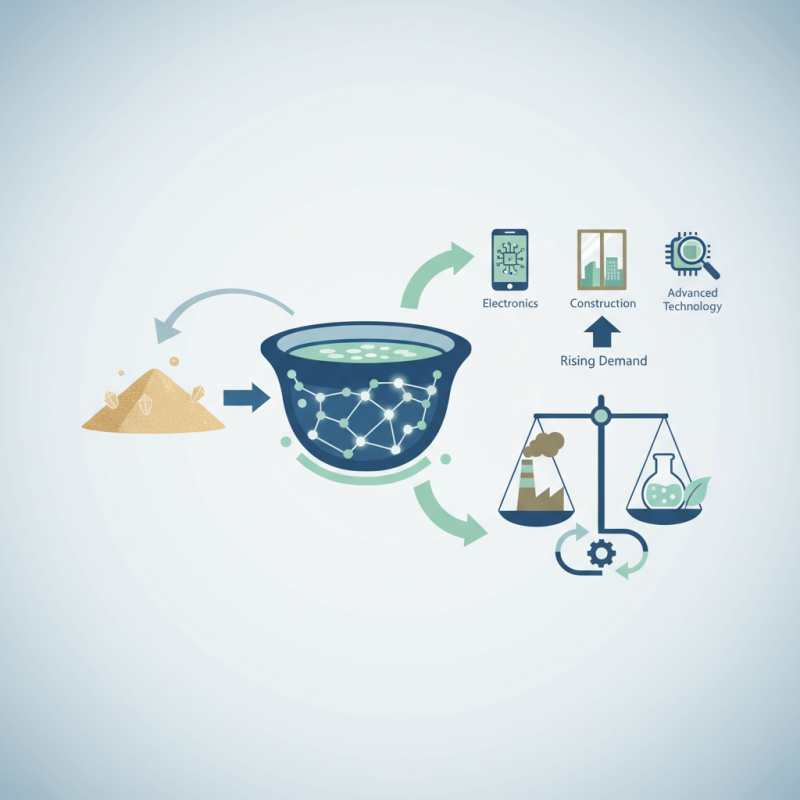
Silica's role does not end with glassmaking. It influences various applications from consumer products to advanced technology. High-quality glass is essential for electronics and construction. The demand for superior silica continues to rise. Innovations are being made to enhance its utility.
However, producing glass also presents challenges. The environmental impact of silica extraction needs attention. Balancing production and sustainability is vital. Industry must reflect on these issues. Future advancements will depend on addressing both quality and environmental concerns.
The Importance of Silica in Glass Production
Silica, a key ingredient in glass production, plays an essential role in determining glass quality. Comprising approximately 70-75% of glass composition, silica enhances its durability and clarity. Industry reports indicate that global silica consumption in glassmaking reached over 100 million tons in 2022. This significant demand reflects the versatility of glass products in various sectors.
The properties of silica contribute to the glass's physical and chemical stability. However, not all silica sources yield the same quality. Some contain impurities that affect glass clarity and strength. As a result, manufacturers must carefully select silica types for their specific applications. A study noted a 12% increase in defect rates when using lower-grade silica. This raises questions about sourcing and quality control in the industry.
Despite its importance, the glass industry faces sustainability challenges. Silica mining can impact local ecosystems. Clever solutions, such as recycling glass, can mitigate these effects. Utilizing recycled materials not only reduces reliance on natural resources but also lowers energy consumption. Yet, the industry still grapples with balancing quality and sustainability. End-users demand high-quality glass, making this a tricky dilemma for producers.
Exploring the Role of Silica in Glass Production
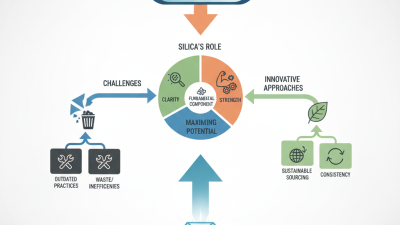
This bar chart illustrates the key applications of silica in glass production and the percentage of silica content typically used in various types of glass. Silica is essential for creating the right properties in glass, influencing its strength, thermal resistance, and clarity.
Types of Silica Used in Glass Manufacturing
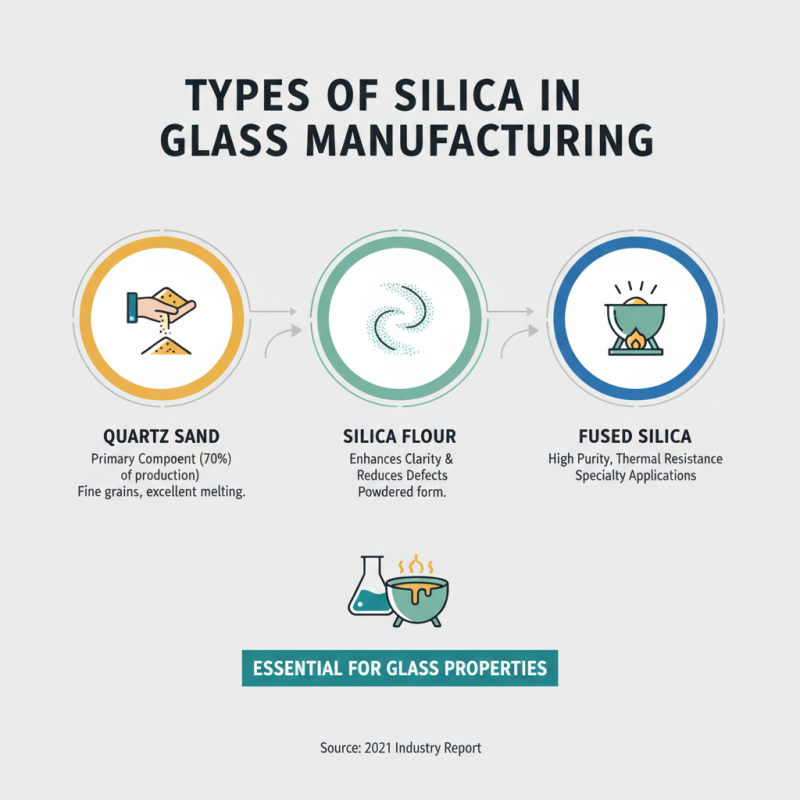
Silica is a crucial component in glass manufacturing, providing essential properties that define glass's characteristics. There are several types of silica utilized in this industry, each serving a unique purpose. For instance, quartz sand is the most commonly used silica type. It consists of fine grains and offers excellent melting properties. According to a 2021 industry report, quartz sand contributes to around 70% of glass production.
Another form of silica is silica fume, a by-product from silicon and ferrosilicon industries. Silica fume is often used for specialty glasses. It enhances durability and resistance to geological conditions. Its fine particles improve the efficiency of the melting process. Some studies reveal that incorporating as little as 5% silica fume can significantly increase the mechanical strength of glass.
Despite its advantages, the reliance on silica is not without concerns. The extraction of natural silica poses environmental challenges. For example, unsustainable mining impacts local ecosystems. Furthermore, the processing of silica generates dust, which can affect workers' health. These issues necessitate a thorough reflection on sustainability practices within glass production. Addressing these environmental impacts is vital for the future of the industry.
The Glass-Making Process: From Silica to Final Product
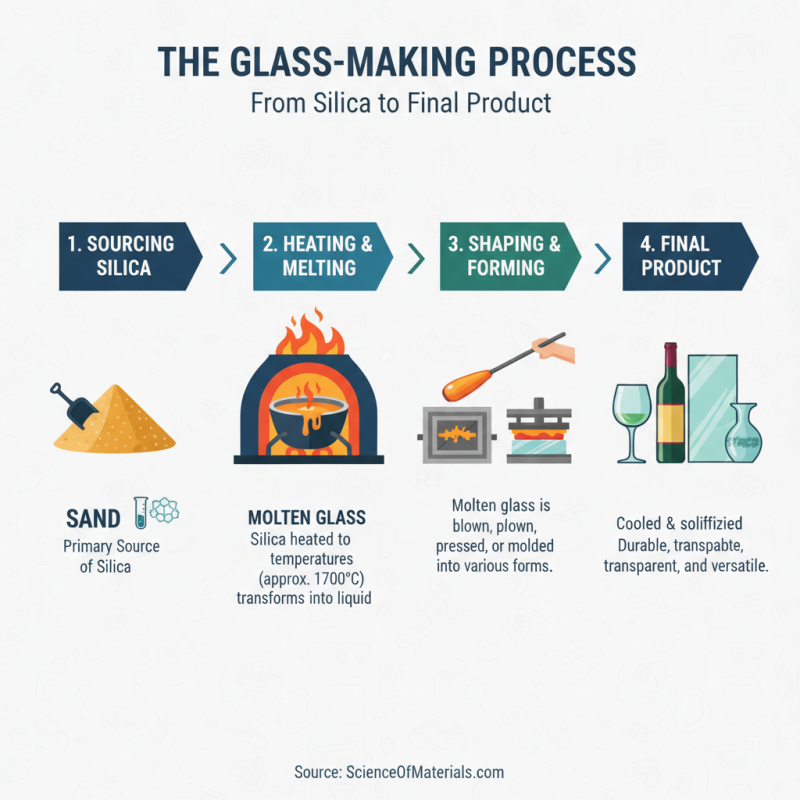
The glass-making process begins with silica, a key ingredient. Silica is sourced from sand and is known for its unique properties. When heated to high temperatures, it transforms into a molten glass state. This transition is what makes it integral to glass production.
Once silica is melted, it is often mixed with other materials to create different glass types. For instance, adding soda lowers the melting point. This mixture cools to form sheets or bottles. However, achieving the right consistency can be tricky. Overheating can lead to bubbles; underheating results in a weak structure.
After shaping, glass must be annealed. Annealing relieves internal stresses. It's crucial for durability and clarity. Yet, the cooling process is delicate and needs careful monitoring. Even a slight error can affect the final product. This highlights the challenges in glass production, where precision is essential.
Applications of Glass Made from Silica in Various Industries
Silica plays a crucial role in glass production. Its unique properties make it ideal for various applications across industries. Glass made from silica finds use in construction, automotive, and consumer goods. For instance, windows and facades in buildings commonly incorporate silica-based glass. This type of glass offers transparency and durability. Yet, it can be costly to produce.
In the automotive sector, silica glass is essential for windshields and mirrors. These components ensure both safety and visibility. They also enhance the overall look of vehicles. However, the glass can shatter upon impact, leading to safety concerns. Improving the strength and resilience of silica glass remains a challenge.
Consumer products, like bottles and jars, also benefit from silica glass. It preserves food and beverages effectively. The clarity of the glass is appealing. Yet, it is vulnerable to scratches and breakage. Manufacturers continually seek ways to enhance its durability while maintaining quality. The quest for perfection in glass applications goes on.
Environmental Considerations in Silica Mining and Glass Production
Silica is essential for glass production, but its mining raises critical environmental concerns. The extraction process can lead to habitat destruction and water resource depletion. A report from the U.S. Geological Survey noted that silica sand mining grew exponentially, increasing demand by 55% in just a few years. This rapid growth can disrupt local ecosystems.
Water pollution is another serious issue. Silica mining can release fine particles into nearby water bodies. These particles affect aquatic life and can contaminate drinking water sources. The World Health Organization has highlighted the risk of silica dust exposure, leading to respiratory diseases among workers in mines.
Efforts to mitigate these impacts are necessary, yet not always effective. Some mining operations fail to restore landscapes post-extraction. This lack of rehabilitation can leave lasting scars on the environment. Sustainable practices must be prioritized to balance industry needs and ecological health.