What is Quartz Microfiber Filters and How Do They Work?
Quartz Microfiber Filters have emerged as a crucial innovation in air and liquid filtration systems. These filters are designed to capture particles with exceptional efficiency. Dr. Emily Carter, a leading expert in filtration technology, states, "Quartz Microfiber Filters offer remarkable performance, redefining standards in filtering applications." The technology utilizes fine quartz fibers that enhance the filter's ability to trap microscopic pollutants.
This advanced filtration system functions by leveraging the unique properties of quartz fibers. Their high surface area allows for effective particle collection. However, the effectiveness of these filters is not without challenges. Users must consider maintenance to ensure optimal performance. Regular cleaning and replacing are essential for prolonging filter life and efficacy.
Understanding Quartz Microfiber Filters is not just about their efficiency. It includes recognizing the need for periodic evaluation and improvement in existing methods. While these filters excel in many areas, potential applications still require exploration. Factors like the environment and specific use cases play a significant role in determining their best applications. Awareness of these elements is key for users seeking the most efficient filtration solutions.
What Are Quartz Microfiber Filters?
Quartz microfiber filters are advanced filtration devices. They are made from fine fibers of quartz that effectively trap particles. These filters are commonly used in laboratories and industrial settings. Their design allows for high efficiency in retaining dust, allergens, and other pollutants.
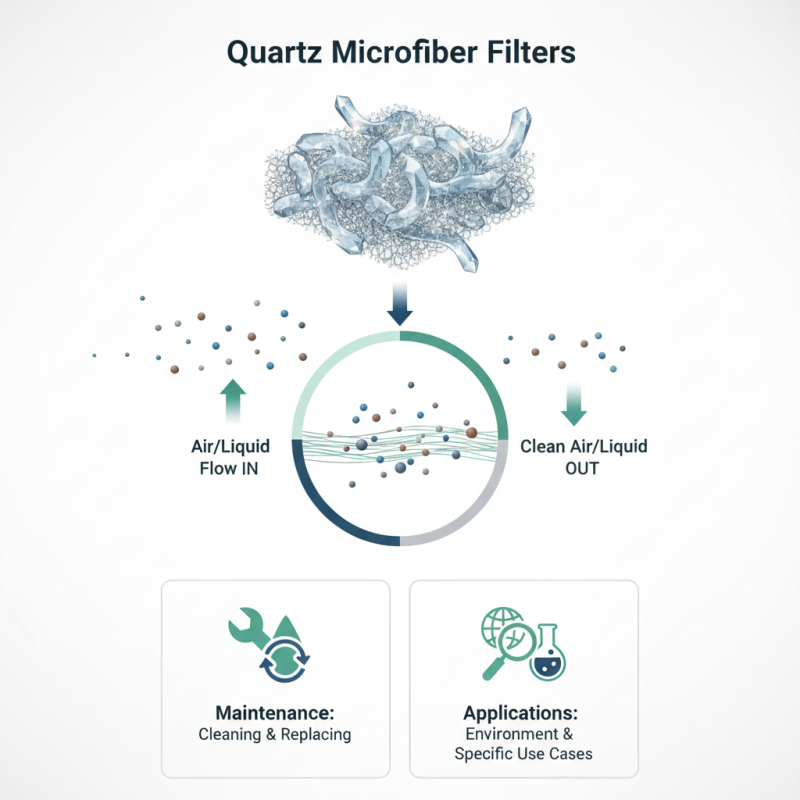
The unique structure of quartz microfiber makes it highly effective. The fibers create numerous small pores that capture particles as air flows through. This mechanism enables the filters to achieve a high level of filtration while maintaining low resistance.
Users notice improved air quality and cleanliness in their environments. However, there can be challenges in maintaining these filters. Regular cleaning and replacement are necessary to ensure optimal performance.
Despite their advantages, some drawbacks exist. Quartz fibers can be fragile, and handling them requires care. Additionally, if not maintained properly, they can become less effective over time. This may lead to increased particle release, which is counterproductive.
Users must be aware and proactive to maximize the benefits of quartz microfiber filters.
The Construction and Materials Used in Quartz Microfiber Filters
Quartz microfiber filters are critical in various industrial applications. They are constructed from fine quartz fibers, providing high filtration efficiency. This construction allows them to capture very small particles, even down to 0.1 micrometers. As a result, they are ideal for air and liquid filtration processes.
These filters use silica-based materials, which ensure a high thermal stability. This is crucial in environments where temperatures can fluctuate significantly. Research shows that quartz microfiber filters can remove up to 99.9% of particulate matter, making them highly effective.
However, manufacturers need to consider the durability of the fibers under extreme conditions. Some studies suggest that prolonged exposure to harsh environments can lead to degradation. Attention to these details can enhance longevity.
The physical properties of quartz microfiber contribute to its effectiveness. For instance, the fibers have a specific surface area that facilitates greater adsorption. Nevertheless, not all filters perform equally. Variations in fiber density, for instance, can impact performance. Regular assessments and quality checks are necessary to ensure optimal filtration results. Data indicate that improper maintenance can lead to a significant drop in efficiency, necessitating more frequent replacements.
The Mechanism of Filtration in Quartz Microfiber Technology
Quartz microfiber filters are a remarkable advancement in filtration technology. Their structure consists of fine threads of quartz, which provide a unique mechanism for trapping particles. This technology is often used in air and water filtration systems due to its efficiency. According to industry reports, these filters can capture particles as small as 0.3 microns with an efficacy rate exceeding 99.97%.
The filtration mechanism relies heavily on the physical properties of quartz microfibers. As air or liquid passes through the filter, particles are trapped by the fibers through various processes such as inertial impaction, interception, and diffusion. This multi-layered trapping technique enhances overall filtration performance. Despite these advantages, the production of quartz microfiber filters can leave a significant carbon footprint, raising environmental concerns.
Compounding these issues is the need for regular maintenance and replacement of filters. Failure to do so can lead to a decrease in filtration efficiency. Some users may not realize the importance of this aspect. A lack of timely replacement might not only affect air purity but could also compromise system efficiency over time. Balancing performance with environmental responsibility remains a challenge in the industry.
What is Quartz Microfiber Filters and How Do They Work? - The Mechanism of Filtration in Quartz Microfiber Technology
| Feature |
Description |
Applications |
Advantages |
| Material Composition |
Made from quartz microfiber, which provides high thermal stability and chemical resistance. |
Air filtration, water treatment, laboratory applications. |
High filtration efficiency with minimal pressure drop. |
| Filtration Mechanism |
Utilizes depth filtration to trap particles throughout the filter media. |
Industrial dust collection, HVAC systems. |
Long service life due to greater dirt-holding capacity. |
| Particle Size Retention |
Can effectively filter particles as small as 0.3 microns. |
Pharmaceutical manufacturing, food processing. |
Ensures high purity of filtered products. |
| Durability |
Resistant to common solvents and high temperatures. |
Chemical filtration, electronics cooling systems. |
Reduces the need for frequent replacements. |
| Environmental Impact |
Recyclable materials minimize waste. |
Green building certifications, sustainable practices. |
Contributes to eco-friendly filtration solutions. |
Applications of Quartz Microfiber Filters in Various Industries
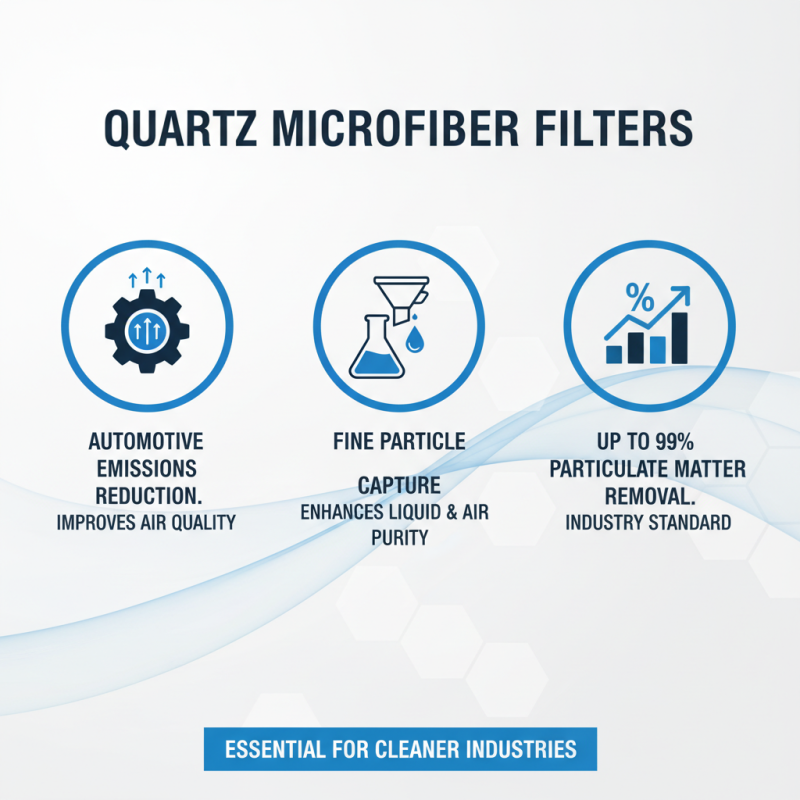
Quartz microfiber filters are essential in various industries due to their unique properties. These filters effectively capture fine particles, enhancing air and liquid quality. In the automotive sector, for example, their use can reduce emissions significantly. Reports indicate that quartz microfiber filters can capture up to 99% of particulate matter, improving air quality standards.
In pharmaceuticals, these filters ensure the integrity of sensitive products. They prevent contamination during processes like drug formulation. Quality assurance data shows that using these filters can lead to a reduction in cross-contamination incidents by 30% or more. This data highlights the importance of effective filtration in maintaining product safety.
Despite their advantages, challenges remain. The cost of high-quality filters can be prohibitive for small manufacturers. Additionally, improper disposal of used filters poses environmental concerns. These issues prompt industries to reconsider their filtration choices actively. Finding a balance between cost and efficiency is vital for progress.
Advantages and Limitations of Using Quartz Microfiber Filters
Quartz microfiber filters are increasingly popular in various industries for their efficiency in air and liquid filtration. These filters capture particles as small as 0.1 microns, providing a high level of performance. According to a report by the Filtration Society, quartz microfiber filters can achieve a filtration efficiency of over 99%. This efficiency is crucial for environments requiring high purity levels.
However, there are limitations to consider. Quartz microfiber filters can be costlier than traditional filters. The initial investment may deter smaller operations. Additionally, they may require more frequent replacement, which can lead to higher long-term costs. A study from the American Filtration and Separations Society highlights that while these filters perform excellently, their lifespan can be significantly affected by the nature of the contaminants they face. Filters exposed to corrosive substances may degrade faster than those in cleaner environments.
The weight of quartz microfiber could also be a factor. This sometimes complicates installation in certain setups. Ensuring proper compatibility with existing systems is essential. Users should carefully evaluate their specific needs. While the benefits of high efficiency are clear, it's important not to overlook potential downsides. Balancing performance with cost and installation ease is crucial for optimal usage.
Quartz Microfiber Filter Efficiency by Particle Size