2026 How to Choose the Right Quartz Glass Crucible for Your Needs?
Choosing the right Quartz Glass Crucible can significantly impact your work's success. Dr. Emily Chen, a leading expert in materials science, once stated, "The right crucible can elevate your results." This statement highlights the importance of selecting high-quality tools.
Many factors influence your choice. Consider size and shape. A crucible that is too small may lead to overflow. Similarly, an incompatible material can lead to contamination. Understanding your specific needs is crucial for optimal performance.
While there is a plethora of options available, not all crucibles meet industry standards. It's easy to feel overwhelmed. Take your time when making decisions. Evaluate each option carefully. The wrong choice can hinder progress. Embrace this challenge to find the best Quartz Glass Crucible for you.
Understanding Quartz Glass Crucibles and Their Applications
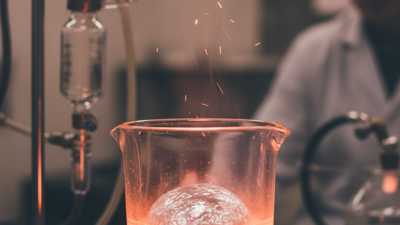
Quartz glass crucibles are essential in many scientific and industrial applications. They are known for their high-temperature resistance and chemical stability. These properties make them perfect for various processes, including melting metals, growing crystals, and analyzing materials. Their transparency also allows for easy observation during experiments.
When choosing a quartz glass crucible, consider the application. Certain processes require specific shapes and sizes. For example, a larger crucible is necessary for high-volume experiments. Likewise, if you need to observe reactions, select a transparent option for better visibility.
Tips: Always check for thermal shock resistance. This can save your work from unexpected breakage. Buying the right size prevents overflow in experiments. Think about your materials, too. Some substances may react differently in various crucibles. Testing with small batches helps identify the best choice.
Remember, working with quartz glass can present challenges. Overheating or rapid cooling can cause cracking. Be mindful of proper handling techniques. Always prioritize safety and equipment integrity in your projects. Seek feedback from colleagues to improve your process and avoid common mistakes.
Key Factors to Consider When Choosing a Quartz Glass Crucible
When selecting the right quartz glass crucible, several key factors come into play. The purity of the quartz is crucial, as higher purity levels result in better thermal stability and chemical resistance. Reports show that high-purity quartz can withstand temperatures above 1,100°C. This makes it essential for labs that require durability under extreme conditions.
Size is another vital consideration. Crucibles come in various sizes to cater to different applications. It's important to choose a size that aligns perfectly with your requirements. A common mistake is to select a crucible that is either too large or too small for the intended use, leading to inefficient processes.
Tip: Always check the thermal expansion coefficient. A mismatch can lead to cracking during heating.
Furthermore, the shape of the crucible can impact its usability. Some processes require specific designs to optimize heat distribution. Not all shapes are suitable for every application. Conducting research before making a choice is vital.
Tip: Take time to read user reviews on material performance.
Transparency and clarity of the quartz also matter, especially in applications needing optical quality. Testing samples can give you insights into how they perform under specific conditions. Balancing these aspects can be daunting, but making informed choices will lead to better outcomes.
Different Types of Quartz Glass Crucibles and Their Features
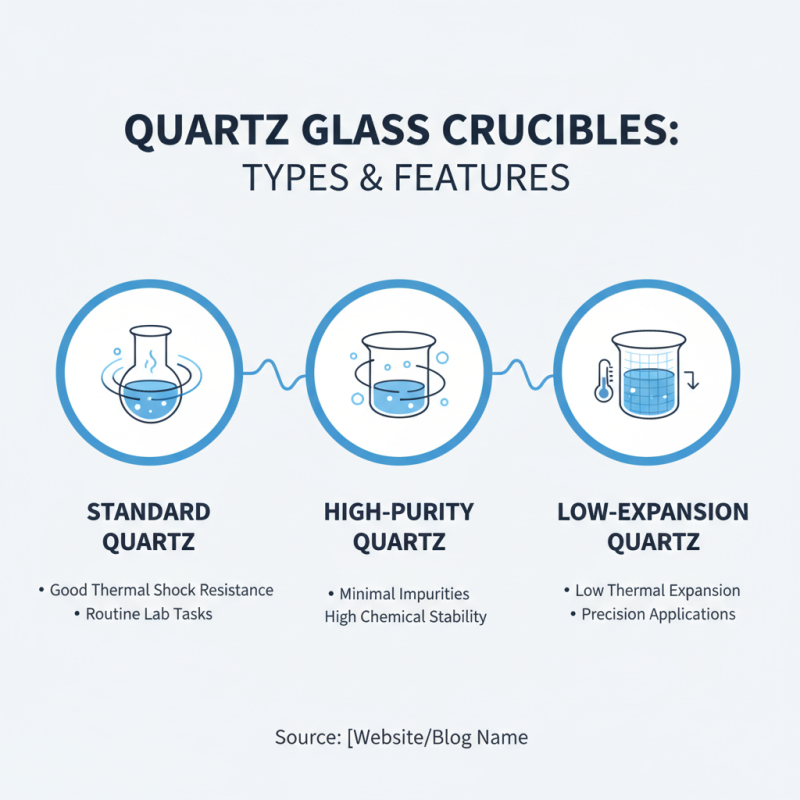
When selecting a quartz glass crucible, understanding the different types is essential. There are several key types: standard, high-purity, and low-expansion crucibles. Each serves distinct needs in various applications. Standard quartz crucibles exhibit good thermal shock resistance. They are commonly used in laboratory settings for routine tasks. High-purity crucibles contain minimal impurities. This is crucial for applications requiring high chemical stability.
Low-expansion quartz crucibles are designed for specific temperature ranges. They have a thermal expansion coefficient close to zero. This characteristic minimizes breakage risk during heating. A report from the International Journal of Applied Glass Science highlighted that low-expansion crucibles can withstand temperatures exceeding 1,200 degrees Celsius. However, they are often more expensive. The price varies depending on the purity level and size.
Choosing the right crucible is not straightforward. It requires weighing factors like temperature resistance, intended use, and cost. Some users mistakenly select low-cost options without considering quality. This can lead to product failure and safety hazards. Understanding these features is vital for making informed decisions. Each application demands a careful approach to material selection.
How to Assess the Quality and Durability of Quartz Glass Crucibles
When choosing quartz glass crucibles, assessing quality and durability is crucial. Look at the thickness of the glass. Thicker walls often indicate better durability. However, thickness may vary between manufacturers. Not all thick glass performs well under high temperatures. Focus on how the crucible was manufactured. A well-formed crucible exhibits uniform thickness and smooth edges. These factors reduce the chance of cracking during use.
Consider the thermal resistance of the crucible. High-quality quartz glass can withstand extreme temperature changes. This feature is vital in laboratory settings. Scratches or any visible damage can affect performance. A simple crack might not be obvious but could lead to failure. Always inspect the glass closely before making a purchase.
Environmental factors can also impact durability. If the crucible will be exposed to harsh chemicals, its resistance becomes significant. Always inquire about the chemical resistance of the quartz glass. This aspect is often overlooked but essential for long-term use. Remember, durability doesn't solely depend on appearance. Quality is often found in the details that aren’t immediately visible.
2026 How to Choose the Right Quartz Glass Crucible for Your Needs?
This chart illustrates the assessment of various quality parameters for quartz glass crucibles, including thermal resistance, chemical resistance, durability, cost, and weight, rated on a scale from 1 to 10. High scores indicate better performance and suitability for diverse applications.
Best Practices for Maintaining and Using Quartz Glass Crucibles
When using quartz glass crucibles, proper maintenance is essential to ensure longevity. Regular cleaning is vital after each use. Avoid harsh chemicals that can damage the surface. Instead, opt for mild detergents and soft cloths. This helps maintain clarity and prevents buildup of residues.
Temperature control plays a crucial role too. Always avoid rapid temperature changes. Sudden shifts can cause thermal shock. Such shocks lead to cracks or breakage. Be mindful of heating and cooling rates. It’s best to follow recommended guidelines for specific applications.
Storage of quartz crucibles is equally important. Keep them in a safe and dry environment. Use cushioned containers to prevent damage. However, remember that even with precautions, accidents happen. Reflect on past experiences for better handling in the future. Knowing these details can save time and resources in the long run.
2026 How to Choose the Right Quartz Glass Crucible for Your Needs? - Best Practices for Maintaining and Using Quartz Glass Crucibles
| Crucible Type |
Max Temperature (°C) |
Volume (mL) |
Recommended Use |
Maintenance Tips |
| Standard Quartz Crucible |
1200 |
50 |
Melting and sintering |
Avoid rapid temperature changes |
| High Purity Quartz Crucible |
1300 |
20 |
High-precision applications |
Clean before each use |
| Large Industrial Quartz Crucible |
1150 |
500 |
Mass production processes |
Regularly inspect for cracks |
| Sealed Quartz Crucible |
1000 |
10 |
Chemical analysis |
Store in cool, dry conditions |
| Micro Quartz Crucible |
900 |
5 |
Lab experiments |
Handle with care |