Top 5 Best Quartz Round Bottom Flasks for Your Laboratory Needs?
In the realm of laboratory equipment, the Quartz Round Bottom Flask stands out for its durability and heat resistance. According to recent market research, the global laboratory glassware market is expected to reach $11.1 billion by 2025. This growth underscores the importance of high-quality materials in scientific work.
Quartz Round Bottom Flasks are essential for many experiments. Their ability to withstand extreme temperatures makes them ideal for distillation processes. However, not all flasks meet the same standards. Choosing a subpar product can lead to inaccurate results or even safety hazards.
Many laboratories overlook the specific needs when selecting a Quartz Round Bottom Flask. This oversight can impact the reliability of experiments. It's crucial for scientists to assess their individual requirements carefully. The right flask can turn an ordinary procedure into an extraordinary discovery.
Overview of Quartz Round Bottom Flasks and Their Applications
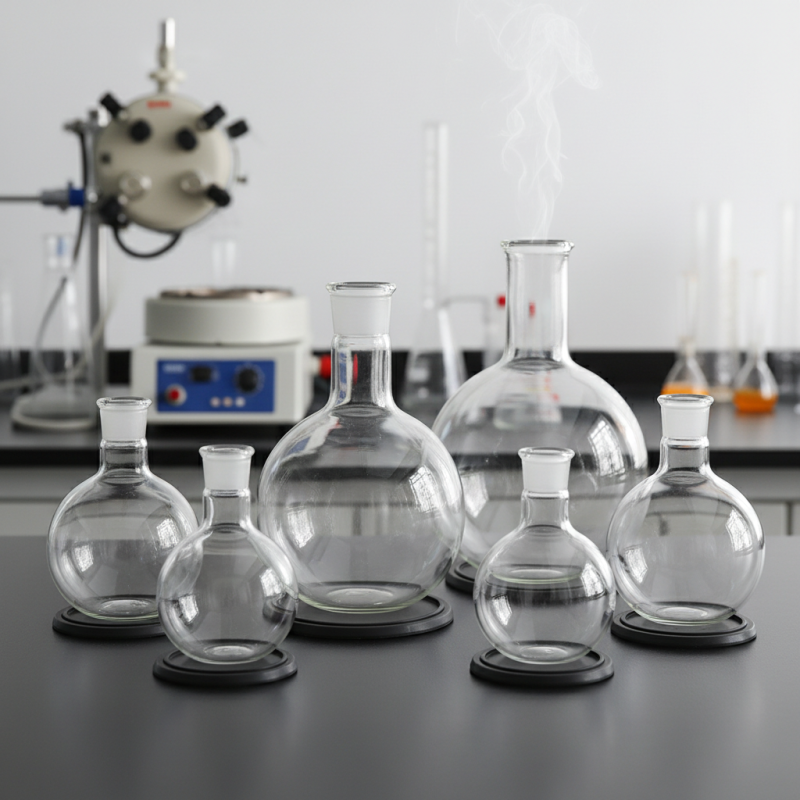
Quartz round bottom flasks are essential in many laboratories, particularly in chemistry. They offer
superior thermal stability and resistance to chemical corrosion.
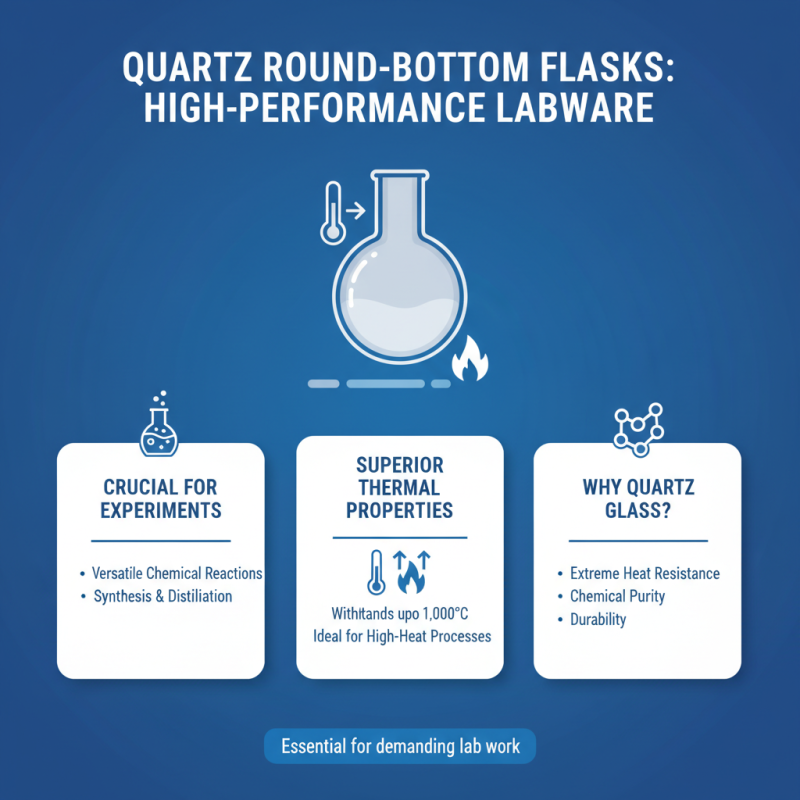
These flasks can withstand high temperatures, crucial for distillation processes. Data shows that quartz flasks
can endure temperature changes up to 1,200°C. This capability makes them ideal
for reactions requiring precise temperature control.
In labs, these flasks are often used for refluxing and evaporation processes.
Their round shape promotes even heating and reduces the chance of localized overheating. The smooth inner surface
ensures minimal contamination of samples, which is vital for accurate results. However, the flasks can be fragile.
Users need to handle them with care.
Tips: Always inspect for cracks before use. A single flaw can lead to hazardous breakage. Remember that
regular cleaning is important to maintain performance. Avoid abrupt temperature changes to enhance their lifespan.
Ensuring a safe environment while working with quartz flasks is crucial, as accidents can disrupt experiments
and waste resources. Being attentive to these details can save time and ensure results are reliable.
Key Features to Consider When Selecting a Quartz Round Bottom Flask
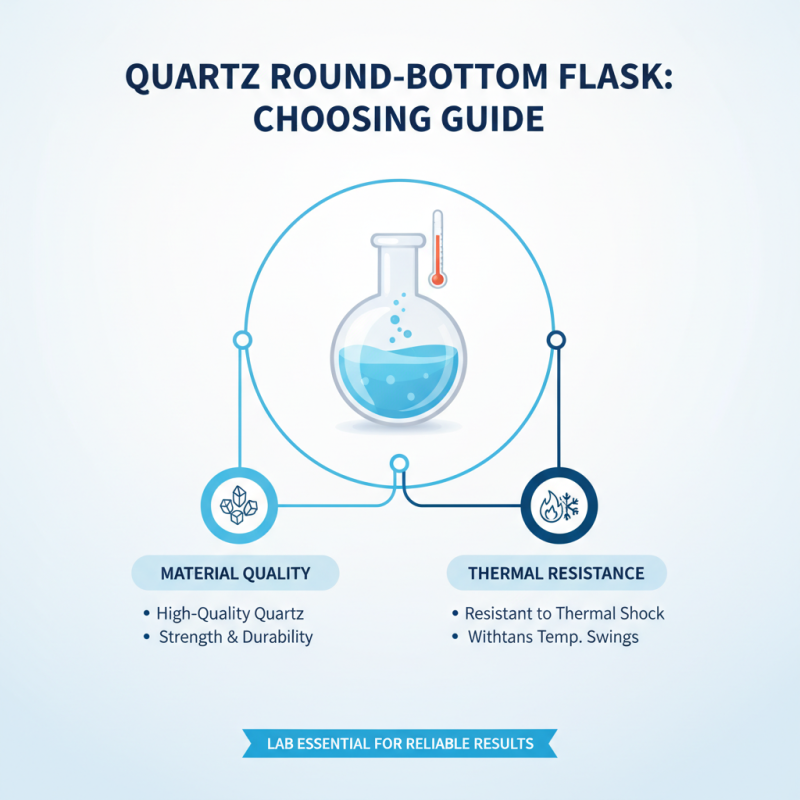
When choosing a quartz round bottom flask, consider several important factors. The material of the flask is crucial. High-quality quartz is strong and resistant to thermal shock. This ensures durability under varying temperature conditions, which is essential for laboratory experiments.
Size and capacity also play significant roles. Flasks come in various sizes, from small 50ml to large 500ml. Select a size that fits your experiment needs. Ensure it can accommodate the volumes you plan to work with. Sometimes, a smaller flask may seem ideal, but it might restrict your experimental scope.
Take note of the neck design and compatibility. Some flasks have standard neck sizes, while others may have special fittings. This can affect your ability to use various equipment. If the neck is too narrow, it can limit your access to the contents. Remember to evaluate your workflow needs. Reflecting on these features can help you avoid issues in your experiments.
Comparison of Performance and Durability Among Selected Flasks
When selecting a quartz round bottom flask, performance and durability are paramount. The material’s thermal properties are crucial; quartz can withstand high temperatures, making it ideal for reaction processes. Reports indicate that quartz flasks have a superior temperature resistance compared to borosilicate glass. Specifically, quartz can endure temperatures up to 1100°C, while borosilicate glass usually withstands only up to 500°C. This difference significantly impacts applications requiring high heat stability.
Durability is another critical factor. Studies show that quartz flasks demonstrate lower thermal expansion. They are less prone to thermal shock, reducing breakage risk. However, quartz is more brittle than other materials. A slip or impact can lead to fractures. Industry data suggest that nearly 30% of laboratory accidents involve broken glassware. Users must handle these flasks with care.
Performance also entails chemical resistance. Quartz flasks resist a broader range of chemicals compared to standard glass. This versatility makes them valuable in laboratories where varied substances are handled. Nevertheless, the cost of quartz flasks remains higher. This might lead labs to question their investment in such equipment. Balancing performance against budget constraints can be challenging for many facilities.
Maintenance Tips for Long-lasting Use of Quartz Round Bottom Flasks
When using quartz round bottom flasks, proper maintenance is crucial for longevity and optimal performance. These flasks, known for their thermal resistance and chemical stability, can endure high temperatures up to 1000°C. However, improper care may lead to unexpected fractures or degradation. A study by the American Chemical Society highlights that nearly 15% of quartz glassware failures are due to user mishandling.
Regular cleaning is essential. Use soft brushes and mild solvents to avoid scratching the surface. Abrasive cleaners can cause micro-abrasions, which weaken the glass over time. Additionally, always inspect for chips or cracks before use. A significant percentage of lab accidents stem from overlooked defects, contributing to a lack of attention in routine checks.
Store these flasks in a secure location, away from heavy equipment or tools. The glass is resilient but can break under significant impact. It's advisable to avoid extreme thermal shocks; gradual temperature changes extend the lifespan. Researchers suggest that addressing these maintenance aspects can enhance the durability of quartz flasks, ensuring they function safely and effectively in laboratory environments. Regular attention to these details can prevent costly replacements and enhance lab efficiency.
Top 5 Best Quartz Round Bottom Flasks for Your Laboratory Needs
This bar chart illustrates the durability ratings of the top 5 best quartz round bottom flasks suitable for laboratory use. Each flask is evaluated based on its resistance to heat and chemical interaction, ensuring long-lasting performance in a laboratory environment.